
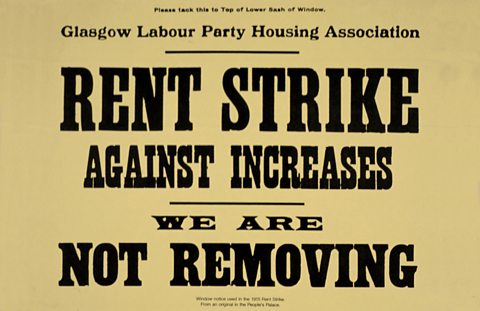
And we’re going to have to fight for it…
What is ‘Good Cause’ and how could it help us?
The ‘Good Cause Eviction Law’ is a policy passed in New York state in 2024 to protect tenants from private landlords. While the law was passed by the state, New York’s localities only implement it if they want to. At the time of writing, Good Cause has been implemented in New York City, Albany, Ithaca, Rochester, Binghamton, and other municipalities, adapted to the specific needs of tenants in each city. ‘Good Cause’ protects tenants in two basic ways. First, it restricts the ability of landlords to remove tenants without justification. Second, it restricts the ability of landlords to raise rent on tenants by unreasonable amounts.
While the law is explicitly named for evictions, it also applies to lease renewals. With ‘Good Cause’ legislation, landlords are required to provide tenants with the chance to renew their lease. In order to remove a tenant through non-renewal or through eviction, landlords need to have a real reason, such as illegal activity or lease violations. At the same time, it also protects tenants from excessive rent increases, blocking a loophole many landlords take advantage of to remove tenants. Statewide, the reasonable rent increase is capped at 10 percent of the last rent paid, or 5 percent plus the change in the consumer price index, whichever is lower. To increase it more than that, landlords have to go to court and justify it.
In a city like Oneonta, this policy could provide much needed relief. Oneonta’s tenants are being squeezed by landlords who have the real say over the political affairs of the city. In a town with limited access to housing, landlords are able to subject tenants to poor conditions and arbitrarily raise rents. This is done to maximize profit and cut costs. A particular problem in this city is that landlords want to transform as much housing as possible into vacation rentals. They can do this by pushing working class tenants out of the city in a variety of ways. Refusing to renew leases and absurd rent increases are both tools landlords use to displace long term tenants. ‘Good Cause’ would hinder their ability to do this.
In the face of a nationwide affordability crisis, brought about by a stumbling capitalist economy and made worse by a meaningless war, good cause would relieve a bit of the burden on ordinary Oneontans. While it would help working class Oneontans stay in their homes, it would also cut into the annual profit growth of landlords. Given their power over the city and its elected officials, landlords will not allow ‘Good Cause’ to come here without a fight. From misinformation campaigns to lobbying to threatening tenants, they will do everything in their power to stop this legislation from passing. If nothing is done, the landlords will get what they want as usual and Oneonta’s tenants will pay the price. If we want to make this city an easier place to live in, we can’t just sit back and hope for the best.
How do we get it (and keep it)?
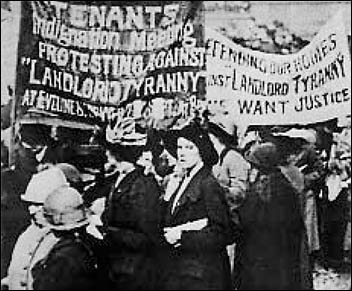
Whether or not we get Good Cause will depend on whether or not tenants themselves are willing to contend with landlords for Oneonta’s future. We emphasize willing here, because tenants certainly have the strength to do it. It may not feel like it, but landlords depend on tenants for their incomes, as do cities. There are around 2800 occupied rental units in Oneonta, with an average monthly rent between $1100 and $1600. This means that year over year, landlords make 37 to 54 million dollars off rent from tenants. These tens of millions of dollars represent real leverage for tenants. On top of that, the majority of Oneonta housing is occupied by tenants. Tenants completely outnumber landlords, giving us a massive advantage if only we knew how to use it. This is power that no one can ignore. It’s power we can use to get our demands from landlords and the city, and whether or not we decide to use it will determine whether or not we win ‘Good Cause’ in Oneonta. Drawing on the lessons of the labor movement, Oneonta tenants have to carry out an organized campaign to use our leverage and make the common council legislate in our interests.
The key to building a strong movement around the ‘Good Cause’ law will be the creation of a city wide tenant’s union capable of uniting as many Oneonta tenants as possible. Similar to the best labor unions which bring together workers to fight for better conditions in the work place, a tenant union brings together tenants to fight for better conditions in their homes and neighborhoods. Tenant unions transform the potential power of tenants into actual power. This requires practical steps and efforts. Here, we will propose a model for how such an organization can be structured and a basic fight plan it can execute to build up and apply its strength.
Oneonta’s tenants are broken up into different groups (single unit housing, multi-unit housing, long term tenants, student/school year tenants), and we need a model of organization capable of embracing all of them. It also needs to avoid the problems of corruption that come with vast bureaucracies and non-profits. Fortunately, we can look to organizations like the LA tenants union for a model of such an organization. The basic unit of a tenant union are individual tenant members, brought together into tenant associations, locals, and councils. These make up the building blocks of a democratic tenant union, building power from the bottom up and across the city through their affiliation with the tenant union. A tenant association is an organization of two or more tenants who are in different units of the same building. Different associations, along with individual tenants in single unit apartments, who share the same street come together to form a tenant union local. The associations and locals function through monthly democratic assemblies to decide on actions, decide how to best bring together and empower their tenant members, approve and suggest decisions for city wide actions, and elect temporary officers to present the locals perspective. Beyond being organs of struggle, they should be community spaces for neighbors.
The actions of the locals and associations should be coordinated with one another in the union. Each local should elect short term officers at their monthly assemblies. Minimally, each of the locals (or association if no local is present) should elect a delegate to a union executive council that is mandated to present the position of the local to the other delegates. The union council would then come together to plan city wide actions. The delegates would then return the decisions back to the locals who would decide on how to implement them. This structure would allow for the coordination of mass tenant action across the city. It would also help strengthen the actions of one local or association by mobilizing tenants beyond those individual efforts. All this would be to carry out a long term fight plan that could make it impossible to ignore the will of the tenants.
How could such a fight plan work? The basic watchwords here are “escalation” and “pressure” on landlords and the city. Start with small things to raise awareness and bring together the public will of tenants. This can be through things like sending signed demand letters and petitions to city officials or attending common council meetings to raise our demands as a group. If that is ignored (which it most likely will be) then we raise the stakes. We bombard the phone lines of local officials with our demands, or organize marches and demonstrations downtown. If that’s not enough, we picket outside city hall or organize sit-ins to stop them from doing anything until they take our demands seriously. During all this, we will undoubtedly have to defend tenants from hostile landlords using the same methods. The key here is to build confidence and strength in order to turn it into mass pressure on the common council while defending tenants from retaliation.
All these methods are about using our numbers to exert pressure on the city and ever so slightly disrupt their day to day functioning. The most powerful weapon we can employ is a mass rent strike. This means an organized refusal of tenants across the city to pay rent until our demands are met. This is a tactic that can work on the city wide scale if we get a critical mass of tenants involved so that it’s impossible to retaliate against any one of us. In building up to it, trial runs through things like organized reductions in rent paid by tenants, or smaller rent strikes against specific landlords could be used to show that the power is real. This directly leverages the tens of millions of dollars made off of us to get what we want. With a rent strike, combined with all the other forms of direct action mentioned above, it would be impossible for Oneonta’s government and landlords to ignore us.
After we win our demands, there is no doubt that landlords will begin planning a counter offensive of some kind. They will try to get back their profits one way or another. Fortunately, with a well organized tenant union, we will be in a position to defend ourselves and keep moving forward. Disorganization leaves us powerless. Unity makes us strong, There is power in a union if we have the will to take it.
Where do we start?
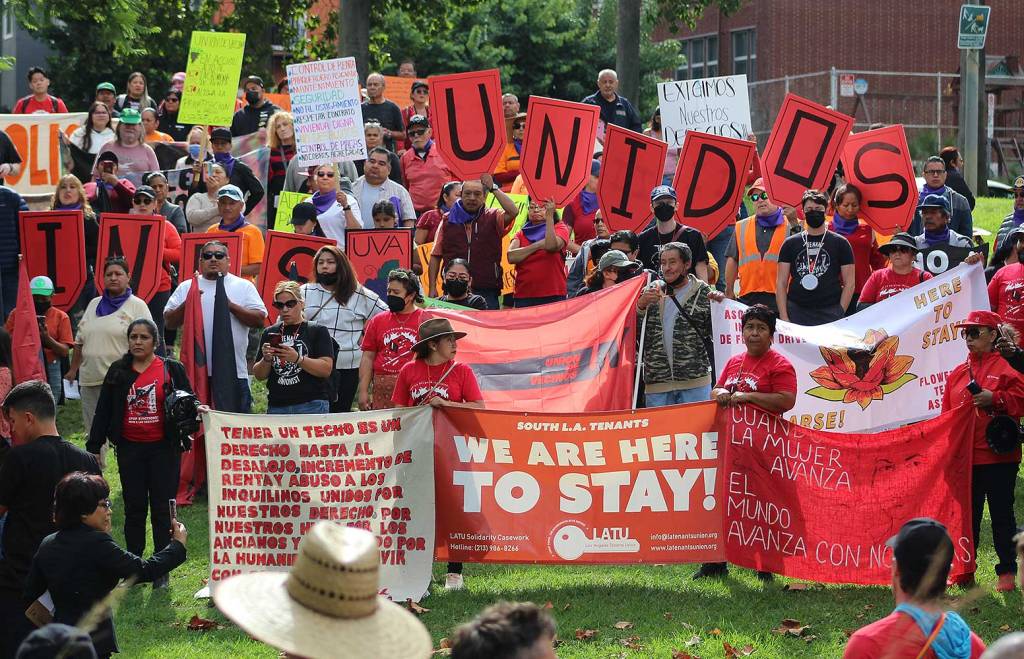
To start, we need to bring together tenants willing to build this power in an organizing committee around this issue. Reclaim Oneonta is attempting to initiate this process. On Wednesday, April 29th, Reclaim Oneonta is hosting a meeting and info session around ‘Good Cause’ and tenant organizing in the 3rd floor community room of the Huntington Memorial Library from 6 to 7 pm. There we will plan the first actions and build communications of the organizing committee, with a special emphasis on how we can begin creating tenant associations and locals across the city and spread awareness about the ‘Good Cause Eviction Law’ to tenants. After that, on May 13th, we will follow up at the same time and place. These meetings will be hosted both in person and online on Jitsi. If you’re tired of feeling powerless in the face of a deepening rent crisis, attend these meetings.


Leave a Reply