The Money Power Problem
In Oneonta, money is power. The city’s development is controlled by the interests of landlords and private developers who put profit over people. A small, but wealthy and well-organized ruling class influence the local government to make decisions that benefit themselves. Their control over the economy of Oneonta has given them control over us and our representatives. We do not control where we live.

Conversations around development are typically framed around pro-development and anti-development outlooks. So called “YIMBY’s” and “NIMBY’s” argue in city hall about whether or not certain projects ought to be pushed forward. Typically, YIMBY’s are seen as broadly liberal and progressive people that argue for the merits of new projects and development. NIMBY’s are typically cast as older and conservative, or sometimes even left leaning environmentalists, hell-bent on keeping things the same. The media frames discussions as being basically between these camps. What is left out of these frameworks is the truth: whether or not a particular development occurs is secondary to the underlying balance of power between classes that shapes not only what developments go forward, but how their benefits and harms are distributed.
By seeing these discussions along ideological lines, we get to ignore reality and escape into a fantasy of democracy. The question of who should own and control civic space is left completely off the table in the carefully managed world of common council meetings. Representatives who control the direction of public conversations are partially responsible for making sure the questions of class power in the city are left untouched. The fact is that whatever development occurs or not, it will ultimately be the interests of landlords and business owners that take priority over the interests of the majority of ordinary people. In some sense, the interests of the actual public don’t even really exist. It is taken for granted that the market oriented ambitions of corporations and landlords are more legitimate than the demands of the masses.
Certainly, any honest person must admit that the desires of a single landlord are given significantly more weight than the demands of any number of their tenants. This is because, above all else, the economic elite literally own our city and make a mockery of the idea of democracy as a result. In every issue of public concern questions of “how will the business community react”, “will this attract investment into the city”, “will this scare away developers”, “will this push out businesses” etc dominate public discourse. Who has ever heard a discussion centered around how workers will react to a decision, or how tenants will be pushed out of a city. This is because the working class, who make up the vast majority of the public, are not seen as agents worth considering. We are simply too powerless. By contrast, the fact that the owning class are organized to realize common interests and own all the economic organs of the city gives them extreme leverage to wield in its decision making. Oneonta’s politics are just another way for capitalists to dominate working class people, while the phantom organs of ‘democracy’ serve to do little more than conceal this domination.
Corporate and landlord led politics has resulted in a city that is hostile to working class residents. Landlords control the housing supply to protect their profits, with the ultimate goal of replacing workers with vacationers. At the same time, corporate developers try to advance for-profit projects without real input from the public. City space and public funds in Oneonta are used to make the city favorable for the wealthy, at the expense of working class people. Politicians and citizens alike bemoan about the city’s issues such as the lack of housing, and yet those issues continue to get worse year over year. Paralyzed by powerlessness, ordinary people withdraw from public life and simply hope that they can escape the consequences of class rule. The workers quietly wait for salvation, for someone to stop the squeeze of stagnating wages and rising costs. Deep down, we know that no one is coming to save us. We must be the ones to save ourselves. The solution to Oneonta’s problems will require working class communities to take the city into our own hands
The Popular Power Solution
Landlords and business interests unite to use their wealth to control Oneonta. In response, Oneonta’s working class must unite to use our numbers and labor to take control over our city. The people of Oneonta must have a direct say in the selection of public projects, the use of public lands and funds, and the creation of public services. The American people do not trust the government or corporations to work for our best interests and now is the time to act like it. The masses of Oneonta must say, as in the words of Pete Seeger “We want no condescending saviors, To rule us from their judgement hall, We workers ask not for their favors, Let us consult for all”, rejecting the false vision of democracy given to us by political officials. This alternative to money-power is popular power.
Popular power is about us using the leverage inherent in our numbers to advance our own agenda, and counter the agendas of the capitalist class. It manifests itself differently in different places and times, but it is defined by our ability to organize, decide what we want, and get it through mass action, especially through exerting mass pressure on the owning class and governments to get what we want. The ability to do this, especially in an organized fashion, is how ordinary people resist tyranny, make change, and bring down entire regimes. If we want to bring down the regime of capitalist domination in Oneonta, popular power is our only path.

Popular power is not just a tool of rebellion, it is foundational to the creation of and maintenance of substantive or radical democracy. Substantive democracy is distinguished from the mere procedural democracy common in America today. Its focus is not on voter turnout or controlled city council meetings. Substantive democracy is about the degree to which the public is actually free and wields decision making power, along with the level of accountability to the people in all matters of public concern. In a substantive democracy, it is the community which decides while their leaders obey and implement those decisions. Direct control, and not “representative” rule is prioritized here. Even more crucially, substantive democracy recognizes that public control must be extended to the economy and not just left to the narrow world of traditional politics. In such a truly democratic vision of Oneonta, the community would decide on its own path of development according to common interests, rather than simply praying for a never before seen cast of responsible representatives and benevolent corporations. Such a transformation of civic life would depend on the exercise and crystallization of popular power by its working-class majority.
The ordinary people of Oneonta are capable of coming together as equals to decide what we want our city to be. We can come together not just as consultants who give limited input on corporate controlled projects, but as free people to create and advance projects on our own terms. Our labor is what makes Oneonta a place worth living in, so we should decide its future. Without the corruption of political officials, bought out or intimidated by economic elites, we could make a city that puts the common good first. The path of popular power depends largely on our willingness to organize in our neighborhoods to determine our own destinies.
The Fight Starts in Our Neighborhoods
There is a practical path to popular power in Oneonta. That path is through the organization of tenant associations and neighborhood councils. Tenant associations don’t just defend renters from landlords, they also can work together to come up with pro-tenant policies and projects. Tenant associations & neighborhood councils allow neighbors to come together as equals to democratically decide on our futures. This is at the core of popular power.
Tenant associations are organizations of renters who share the same building. This gives them a lot of leverage when they decide to act collectively. Their first point of leverage is over their landlords, due to their ability to carry out forms of direct action such as rent strikes and building occupations. Through these kinds of actions, tenants can take back control over their own living conditions from landlords, but they do not have to stop there. Tenant organizations can also make demands of local government, and employ the same direct action methods to apply pressure until those demands are met. Even beyond this confrontational activity, tenant associations can create and carry out projects to improve the lives of their members.
When tenant associations reach out to one another, they can form tenant unions. Tenant unions are region-wide organizations of tenant associations, unifying tenants in different buildings, with different landlords. These unified bodies of tenant associations can greatly increase the freedom of the renters, and change the balance of power in the housing market and in the creation of housing policy. Their strength is a direct consequence of their numbers and position with respect to the landlord class. These organizations allow their members to pool resources, plan activities, make repairs, etc. Above all, it is the willingness of the tenants to act for themselves and each other that ultimately determines their ability to exercise popular power.
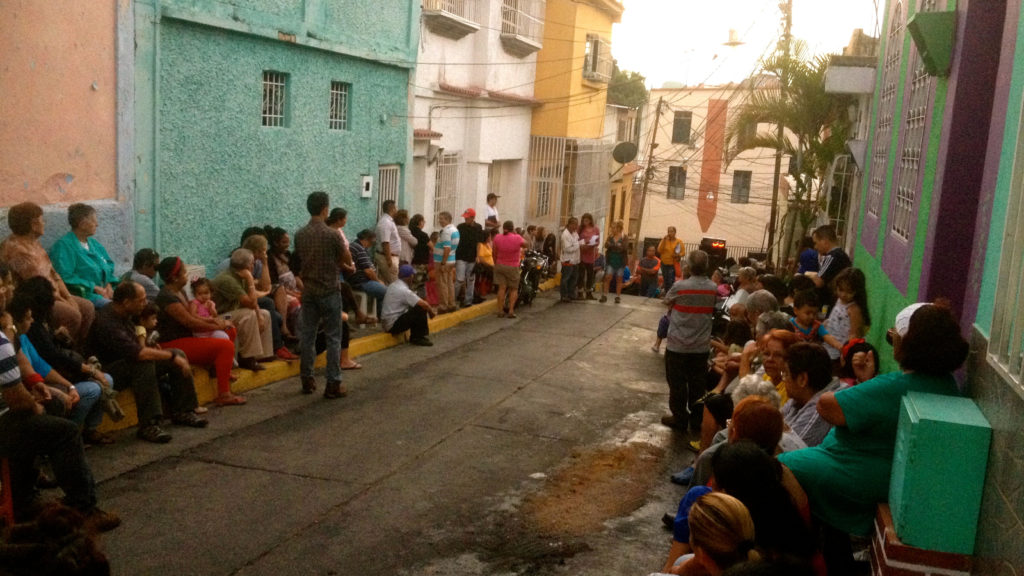
Neighborhood associations or neighborhood councils, also known as communal councils and a whole host of other names, are organizations of residents in a defined area, whether they are tenants or homeowners. Their basic power is again in the ability of their members to make and execute collective decisions. Crucially, when these organizations are in working class neighborhoods, they can unify different people with a wide range of skills and desires. This is very important in a time where corporations and bureaucratic institutions have preempted so much of our daily lives and isolated us from one another. Neighborhood councils can organize people to either make the changes people in a community need without waiting for official sanction, or use their numbers to apply pressure to businesses and governmental institutions. One of their most important functions is filling in the social-service gaps left by local governments, rather than just applying pressure to them. Just like tenant associations, when neighborhood councils unify with one another their power can be immense.
In El Alto, Bolivia, the federation of neighborhood councils (FEJUVE) provide jobs to new-comers, organize infrastructure projects, collectively purchase land, control utilities, mediate disputes, etc. During the Bolivian gas conflict, the organizing efforts by FEJUVE were instrumental in carrying out general strikes and blockades of crucial resources in protest of raising gas prices. FEJUVE members seized critical resources from the government and ultimately played a role in creating lasting transformation that improved the lives of the people. Similar activities have been carried out by neighborhood councils all over the world, though they have rarely attained such a high level of success. Regardless, they show how ordinary people, on their own initiative, can exercise their own power to change society.

To be genuine and effective organs of popular power, tenant and neighborhood organizations must have certain basic features. At the core are rank-and-file control, autonomy, and responsiveness. Rank and file control means that the membership of the organization must be the ones who direct it in more than a formal sense. Autonomy means that these organizations must be free to act on their own authority without depending on elite institutions. Responsiveness refers to their ability to react to rapidly changing situations and actually execute the will of the rank and file. These features call for certain organizational forms and practices.
Rank-and-file control is maintained by rooting their basic decision making power in open assemblies, face to face meetings of the membership. These assemblies should meet regularly, such as once a month, to make decisions through direct democracy and assess their implementation. Autonomy is maintained by ensuring these organizations have independent sources of funding for their activities. This is typically done by raising dues and organizing community owned enterprises. Responsiveness is ensured by creating bylaws that determine the basic operations of the organization, and the election of carefully mandated and recallable delegates in special bodies, such as executive councils and emergency committees. The bodies are responsible for implementing the decisions of the assembly and rapidly responding to arising problems. These selected bodies are also responsible for communicating and coordinating activities between different associations of tenants or neighborhoods. This pattern of neighborhood and tenant organizing has been used repeatedly to fight back against the rising tide of corporate and government bureaucracy.
All of this starts with the calling of a meeting of neighbors or tenants, the first assembly. It only takes one or two people with the initiative to go door to door, identify common interests, learn about one another’s skills and schedules in their own neighborhoods and invite them all to a meeting to address those issues to get things off the ground. The second step is then to make those meetings consistent and organized, deciding on a first activity, and create an executive council. This does not have to initially be composed of the majority of a community, though it should always be open to them and seek to involve those majorities. These organizations ought to grow over time, coming up with activities and addressing issues that will get more and more people interested in the association or council. Beyond that, these organizations should elect delegates responsible for linking themselves to other tenant/neighborhood organizations in their surroundings. This door to door, block by block approach to organizing may not be as glamorous as electioneering, but it is essential to actually empowering people and turning ‘democracy’ from a buzzword to a reality.
When neighborhood based organizations work together, they can create social services, put together social events, pool resources, resist corporate and government power, fight for policies, and create community owned enterprises. Ultimately, they can lay the foundation for truly democratic self-government. There have been cities around the world that have followed this path. It just takes initiative. No one is going to do this for us. We have to be willing to reach out and organize our own neighborhoods.
The Role of Reclaim Oneonta
While we are responsible for organizing our own communities, we can’t do it alone. Reclaim Oneonta exists to unify and help people in organizing their own communities against capitalist domination wherever it exists. We provide education, training, and whatever else people feel they need to boldly organize, seeking to create a broad socialist movement, rooted in our neighborhoods. We exist as a space where people can strategize, reflect, and develop their understanding and practice of developing popular power through experience and study. Practice is not enough without roots in the history and theory of struggle for socialism and communal democracy. The forms of community organization described in this piece are not just going to come into existence or be directed towards revolutionary ends on their own. For this to happen, socialist militants have to create and embed themselves in them as the voices of a liberatory movement, armed with the knowledge of past and ongoing struggles for freedom.
Beyond that, Reclaim Oneonta is also a community. It is a place where radicals can come together to support one another just as we empower the rest of the working class. Revolutionary fervor is not enough, we need a political home and comrades to rely on. Neither of the capitalist controlled parties fulfill that role. Only genuine socialist organizations, independent of the capitalist class, can serve that purpose. If you would like to get off the sidelines and start fighting for popular power, join Reclaim Oneonta!
Join The Movement – Reclaim Oneonta

 reclaimfed.org
Leave a comment